

What Is an Advancement CRM for Universities?
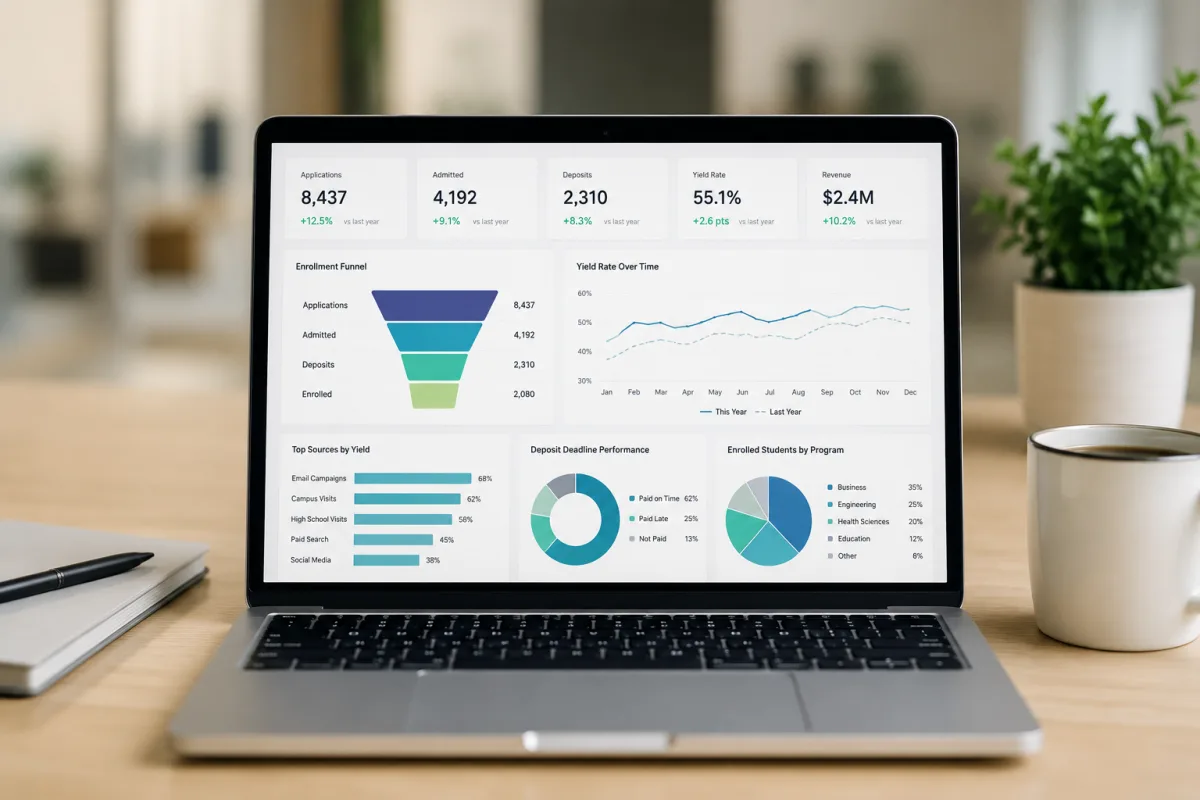
An advancement CRM is the relationship and operational system a university uses to understand, cultivate, engage and steward its long-term constituents: alumni, donors, prospective donors, parents and families, volunteers, corporate partners, foundations, friends of the institution and other supporters of its mission. Many of these constituents are alumni, and for them the CRM extends the relationship beyond graduation; others, such as parents, foundations and corporate partners, may never have been students at all. It is not simply a database of alumni or a fundraising mailing list. It is the system that holds the institution's long-term relationships and makes the work of advancement (alumni relations, development, engagement and stewardship) operationally possible.
That distinction matters because advancement relationships are rarely one-dimensional. Not every alumnus is a donor, not every donor is an alumnus, and not every advancement relationship is primarily financial. A single person may simultaneously be a graduate, a parent of a current student, a mentor, an employer contact and a member of an advisory board. The advancement CRM exists to hold all of that in one coherent record and to help teams act on it responsibly.
This guide explains what "advancement" actually means in higher education, what an advancement CRM manages, how it differs from alumni platforms, admissions CRMs and student information systems, how it connects to finance, and how institutions should decide between a specialist advancement system and a wider institutional CRM architecture.
What does "advancement" mean in higher education?
The Council for Advancement and Support of Education (CASE), the global professional body for the field, treats educational advancement as a set of related disciplines rather than a single function. CASE's Principles of Practice provide guidelines for professionals working across the advancement disciplines: advancement services, alumni relations, development (fundraising) and marketing and communications.
In other words, advancement is the umbrella term for the work an institution does to build support for its mission: philanthropic support, certainly, but also engagement, reputation, volunteering and long-term institutional relationships.
In practice, organisational structures vary considerably. Depending on the institution, the function may be called Advancement, Institutional Advancement, Development, Development and Alumni Relations, External Relations, or Alumni and Development. Some institutions place marketing and communications inside advancement; many do not. CASE defines these as advancement disciplines, but local ownership differs, and there is no single universal departmental structure.
Advancement vs fundraising vs alumni relations
Advancement is broader than fundraising, and the two terms should not be used interchangeably.
Fundraising, often called development, concerns securing philanthropic support: gifts, pledges, campaigns and donor relationships. It is one advancement discipline, and often the most visible one.
Advancement as a whole may also encompass alumni relations, engagement programmes, communications, volunteering, advocacy, events, stewardship and the management of institutional relationships with corporates, foundations and civic partners. Alumni relations, in turn, is not a synonym for fundraising: much of its work (reunions, mentoring, chapters, careers support) has no direct philanthropic transaction attached, even though it builds the affinity from which future support may grow.
This is why an advancement CRM cannot be evaluated purely as fundraising software. It has to represent relationships whose value to the institution is not always financial.
What does an advancement CRM actually manage?
A modern advancement CRM typically holds several categories of data, organised around the constituent rather than around any single transaction.
Constituent identity. Name, preferred name, contact details, addresses, communication preferences, employment and organisational affiliations, household and relationship information, and alumni status. This is the foundation: if identity is wrong or duplicated, everything downstream degrades.
Educational relationship. Programme, degree, graduation year, school or faculty, campus, and relevant elements of student history. This information usually originates in the student information system (SIS) and flows to advancement when the student graduates.
Relationship and affiliation data. Family relationships, employers, corporate affiliations, board and advisory memberships, volunteer roles, clubs and chapters, and mentoring relationships. Relationship modelling matters in advancement precisely because people hold multiple roles at once. A system that treats people as single-role records (a "donor" or an "alumnus" but never both) will misrepresent the institution's actual network.
Engagement history. Event attendance, volunteering, mentoring participation, communications engagement, survey responses, advisory roles and lifelong-learning activity.
Gifts and fundraising data, where the system supports it. Gifts, recurring gifts, pledges, gift dates and amounts, funds and designations, campaigns, appeals, soft credits, tribute and matching gifts, gift status, acknowledgements, receipts and stewardship activity. The CASE Global Reporting Standards provide a common set of standards, guidelines and definitions for reporting educational philanthropy globally, and provide a common reference point for this terminology; a 2026 addendum updates guidance on areas including alumni counts, modes of alumni engagement and soft credit. Vendors do not always use identical labels for these concepts, so terminology should be checked against the standards rather than assumed.
What data belongs in an advancement CRM?
The categories above describe what the system can hold. What it should hold is a governance question. Data collection should serve an actual institutional purpose: a field that no workflow reads and no report uses is a liability, not an asset. Two principles are worth applying from the outset.
First, data minimisation. When a student graduates, the advancement team rarely needs the entire academic record. Constituent identity, degree and programme, graduation date, faculty or school, contact details and stable identifiers usually suffice. Detailed academic content generally belongs in the SIS.
Second, consent and preference management. Advancement communications operate under data-protection and marketing rules that vary by jurisdiction, so communication preferences and their provenance need to be first-class data, not an afterthought.
Advancement CRM vs alumni CRM, admissions CRM and SIS
One of the most common sources of confusion in procurement is the overlap between four adjacent system categories. They are related but not interchangeable.
Advancement CRM
Primarily supports constituent relationships after and beyond the student lifecycle: alumni, donors, prospects and supporters, together with fundraising and stewardship workflows where the platform provides them. It is organised around long-term relationships rather than around an application cycle or an academic year.
Alumni CRM or alumni engagement platform
Often focuses more narrowly on alumni communications, directories, events, communities, mentoring, volunteering and networking. Some alumni platforms deliberately exclude gift management and integrate with a separate fundraising CRM instead. "Alumni CRM" and "advancement CRM" are therefore not exact synonyms: the former may cover only the engagement side of advancement.
Admissions CRM
Manages prospects, enquiries, applicants, recruitment, applications, admissions decisions, offers and enrolment. Its data may later feed advancement (today's applicant is a potential future alumnus and supporter), but its core workflows, cycles and users are different. For a detailed treatment of that category, see Full Fabric's guide to the admissions CRM for higher education.
Higher education CRM
A broader category that can span multiple constituencies and lifecycle stages, from recruitment through to alumni relationships. Full Fabric's complete guide to CRM for higher education covers that wider category, including where advancement CRM sits within it. This article goes deeper specifically into advancement.
Student information system (SIS)
The SIS is the authoritative operational and academic record for enrolled students: programme, registration, academic history, grades, graduation and credentials. An advancement CRM consumes relevant constituent information after graduation, but it does not replace the SIS, and it should not attempt to become a second academic record.
The CRM record is not the financial record
An advancement CRM may record and manage gifts, pledges, designations, campaigns, funds, appeals, acknowledgements, donor history and stewardship activity. That does not make it the university's general ledger or its authoritative financial accounting system.
Depending on the institution's architecture, gift processing often requires coordination, integration and reconciliation with finance and accounting systems, payment processors, banking arrangements and, in some structures, a separate university foundation. The questions institutions need to answer explicitly include: which system records the gift, which system posts the accounting entries, how refunds and reversals are handled, how designations and funds map to the chart of accounts, and where the authoritative financial record sits. The CASE Global Reporting Standards address how philanthropic results should be counted and reported; the accounting treatment itself is a matter for finance teams and professional advisers, and nothing in an advancement CRM removes that responsibility.
How an advancement CRM supports fundraising
Where the platform provides fundraising functionality, it typically supports four connected areas of work.
Gift and campaign management. Recording gifts and pledges against funds, designations, campaigns and appeals; handling recurring giving; tracking soft credits, tribute gifts and matching gifts; and producing acknowledgements and receipts in line with local requirements.
Prospect and major-gift management. Advancement teams use the CRM to identify and qualify prospects, assign them to gift officers' portfolios, track interactions, set next actions, manage proposals and asks, and coordinate relationships that span several parts of the institution. The cultivation cycle (identification, qualification, cultivation, solicitation, stewardship) is often operationalised through what many teams call moves management: structured, recorded steps that move a relationship forward.
Prospect research, used carefully. Current systems increasingly offer wealth indicators, affinity signals, philanthropic research tools and predictive models. These outputs should be treated as probabilistic inputs, not truth. Capacity is not willingness; propensity scores are estimates; and human judgement remains central to deciding whether and how to approach anyone. Prospect research also raises genuine privacy and fairness questions, and it must operate within local data-protection rules and the institution's own research policy. CASE's ethics and accountability resources are a useful reference for governing this work.
Stewardship. Stewardship is the institution's ongoing work after a gift or commitment, and it deserves to be treated as a real workflow rather than an afterthought. It can include acknowledgements, thank-you communications, donor reporting, recognition, impact reporting, pledge management, relationship follow-up and multi-year stewardship plans. Good systems make this work visible and trackable; none of it reduces to an automated email.
Alumni engagement goes beyond giving
A strong advancement CRM should not reduce alumni value to donations. A widely used framework here is CASE Insights on Alumni Engagement, a global benchmarking framework launched in 2019 and used by participating institutions internationally, which measures alumni engagement across four modes:
- Philanthropic. Giving in its various forms, from annual gifts to major commitments.
- Volunteer. Formal volunteering for the institution, such as mentoring, serving on boards or committees, and supporting recruitment or careers activity.
- Experiential. Participation in institutional experiences such as events, reunions and continued learning.
- Communications. Meaningful interaction with institutional communications channels.
Giving is one expression of engagement, not the only one. CASE is explicit that engagement may include indicators beyond those collected, and that its measures of engagement are indicative rather than definitive. That nuance matters when institutions set targets: engagement metrics inform strategy, but they are not a complete account of alumni value, and they should not be used to invent benchmarks the underlying framework does not support.
For the CRM, the practical implication is that engagement data worth tracking spans event attendance, volunteering, mentoring, careers participation, chapter involvement, communications engagement, surveys, advisory roles, lifelong learning and giving. No institution needs to track everything; each data point should serve a decision someone actually makes.
Why the constituent record and its history matter
Advancement depends on continuity. A person may first appear as a prospect, then become an applicant, a student, a graduate, an alumnus, a volunteer, a donor, a mentor or a returning learner, and those roles overlap rather than following a neat sequence.
The pattern is especially pronounced at business schools and in executive education and lifelong learning. An MBA alumnus might later return for an executive programme, send employees to open-enrolment courses, speak at an event, mentor current students, recommend applicants and support the school philanthropically, all within the same few years. If each of those interactions creates a new, unconnected record, the institution loses exactly the relationship history that advancement work depends on.
This is why identity resolution and longitudinal records matter so much in this domain. The same person should not exist separately as a former student, a donor, an event attendee and an executive education participant in four unrelated records. It is also why data quality is an operational discipline rather than a one-off clean-up: duplicate records, outdated employers, missing graduation data, inconsistent household relationships, inconsistent gift coding and unclear communication preferences are the routine failure modes advancement services teams spend their time preventing.
None of this implies that every advancement CRM must also manage every earlier lifecycle stage. It implies that, however the architecture is assembled, the graduate's history needs to arrive intact and stay connected.
Advancement services: the discipline behind the data
CASE identifies advancement services as one of the advancement disciplines in its own right. The function typically covers data management, gift processing, prospect research, reporting and analytics, systems administration, governance and operational support for the rest of the advancement office.
The procurement implication is worth stating plainly: an advancement CRM implementation is not only a fundraising-project decision. Advancement services, IT and finance play a major role in whether the data and processes remain trustworthy over time because they are commonly involved in areas such as deduplication, gift coding conventions, reconciliation and access control. Their early involvement helps ensure that identity, gift coding, reconciliation, access and reporting requirements are designed into the implementation rather than added later.
How an advancement CRM connects to SIS and finance
Two integrations are especially important in advancement architectures.
The SIS-to-advancement handoff. When a student graduates, relevant information flows from the SIS into the advancement or alumni system: constituent identity, degree and programme, graduation date, faculty or school, contact information and stable student identifiers. Applying data-minimisation principles here is both good governance and good hygiene; the advancement team does not need the full academic record, and holding it creates risk without adding value.
Finance integration and reconciliation. Where the advancement CRM records gifts, finance and advancement need an agreed reconciliation process: which totals are compared, how often, who resolves discrepancies, and how designations map to accounting structures. The division of responsibility should be documented, not assumed. The point is system responsibility, not accounting guidance: the advancement CRM may hold the authoritative fundraising and constituent record, while finance retains the authoritative accounting books, and institutions should document exactly which system owns each responsibility.
Should advancement use a separate CRM?
There is no single correct architecture. Three common patterns are worth distinguishing, and the right choice depends on functional depth required, integration complexity, data-duplication tolerance, governance capacity, staff expertise and the existing technology estate.
1. Specialist advancement CRM
A dedicated fundraising and advancement system receives alumni data from the SIS or institutional CRM. This pattern suits institutions that need deep fundraising capability: high-volume gift processing, complex pledge structures, prospect research, major-gift portfolio management and structured stewardship. Blackbaud Raiser's Edge NXT is a prominent example of the specialist category: its current first-party positioning centres on a unified supporter record, gift processing and pledge management, campaign, fund and appeal structures, moves management and portfolio workflows, online giving, duplicate detection and soft credits, with reconciliation supported through integration with Blackbaud's own fund-accounting product. (Blackbaud's published performance percentages are vendor marketing claims and should not be read as independent sector evidence.) The specialist pattern can introduce an additional constituent system that must be integrated and governed alongside the SIS, CRM or other institutional platforms.
2. Enterprise constituent CRM
A wider enterprise CRM supports recruitment, student relationships, alumni, advancement and corporate relationships on one underlying platform. Salesforce's current Advancement and Alumni Relations capabilities sit within Education Cloud, with Agentforce for Education adding AI-supported workflows such as philanthropic research, and offer a current example of this pattern: functionality spans alumni engagement and mentoring, branded portals, philanthropic and prospect research, unified donor insights and campaigns, pledge and donation management, gift planning and processing, and financial reconciliation tooling. The trade-off is that enterprise platforms can require significant configuration and ongoing administration capacity, and institutions should verify current product naming and packaging during evaluation, as branding in this market changes frequently.
3. Lifecycle platform plus specialist advancement system
The institution keeps one connected learner record through recruitment, admissions, enrolment, study, graduation and the alumni relationship, while a specialist fundraising platform manages deeper donor and gift workflows. The two systems exchange the relevant constituent data. This pattern preserves lifecycle continuity (the graduate is never "rediscovered" as a stranger) while still giving the development office specialist tooling where it needs it.
For current market context, it is also worth noting that Ellucian launched Ellucian Advancement in the UK in July 2026, positioned around alumni engagement, communications and giving for universities. The launch illustrates one current market pattern: vendors are increasingly bringing alumni engagement, communications and fundraising capabilities into more connected advancement environments. Even so, the architectural question of one system versus several remains a genuine institutional decision, and none of these patterns is inherently better than the others.
What an advancement CRM should help teams do
Whatever the architecture, the functional expectations cluster into a recognisable set: constituent management with one record per person across roles and affiliations; alumni engagement across events, volunteering, mentoring and communications; fundraising across gifts, pledges, campaigns and appeals; major-gift portfolio and prospect management; stewardship and acknowledgement workflows; event management with attendance and follow-up; segmentation and relevant outreach based on interests, relationships and history; reporting and analytics across engagement, pipeline and campaign results; data governance covering deduplication, auditability, consent, access control and retention; and integrations with the SIS, finance, payments, email and marketing tools, identity systems and the data warehouse.
Not every advancement CRM includes all of these natively, and vendors package them differently. The list is best used as an evaluation checklist rather than a description of any single product.
AI in advancement CRM
Current advancement platforms increasingly use AI for summarising relationship history, suggesting next actions, drafting communications, supporting prospect research, flagging changes in engagement and prioritising portfolios. Blackbaud and Salesforce both position AI capabilities prominently in their current advancement offerings, and Ellucian's 2026 launch leads with AI-powered personalisation and insight.
The risks deserve equal billing: hallucinated or stale information presented confidently, biased propensity models, inappropriate donor profiling, permissions gaps that expose sensitive data to AI features, automated decisions that lack explainability, and the temptation to substitute model output for relationship judgement. AI can help surface information and reduce administrative work, but relationship judgement and ethical fundraising remain human responsibilities. No institution should expect AI to improve fundraising automatically, and any deployment should sit inside the institution's data-protection and ethics governance rather than alongside it.
Privacy, ethics and sensitive data
Advancement datasets can contain sensitive relationship, preference and wealth information, which makes governance a first-order concern rather than a compliance footnote. At a high level, institutions should attend to lawful and transparent data collection, consent and communication preferences, legitimate and role-based access, donor anonymity where requested, data minimisation, retention schedules and clear governance of prospect research. CASE's Principles of Practice and its ethics resources, including the Donor Bill of Rights, provide the profession's reference points here.
None of this constitutes legal advice, and data-protection obligations vary by jurisdiction. The practical takeaway for a CRM decision is simpler: choose and configure systems so that the institution's own policies are enforceable in the software, through permissions, preference management, audit trails and retention controls.
How to choose an advancement CRM
A useful procurement conversation works through nine questions.
Scope. Is the primary need alumni engagement, fundraising, major gifts, full advancement, or an institution-wide constituent CRM? The answer determines which category of system to evaluate at all.
Data model. Can one person hold several relationships and roles at once? Can the system model households, organisations, affiliations and relationships between constituents?
Gift management. Does it support the institution's actual gift, pledge, fund, campaign, appeal and stewardship requirements, in the currencies and receipting contexts the institution operates in?
Integration. How does it connect to the SIS, finance, payments, marketing tools, identity systems and the data warehouse? Are the connectors supported products or bespoke work?
Reporting. Does it support the institution's CASE reporting requirements where relevant? Software can make reporting to the standards easier, but no product automatically creates compliance with them; counting rules still have to be configured and governed by people.
Data migration. How will historical alumni, donor, gift, event and communication records be migrated, and who validates the result?
Governance. Who owns constituent identity, gift definitions, consent, deduplication and the finance reconciliation process once the system is live?
Administration. Which workflows can advancement staff configure without developers, and which changes require vendor or IT involvement?
Geographic fit. Can it support local data-protection requirements, tax and receipting rules, currencies, address formats and communication regulations in every market where the institution operates? Specific tax treatment is a matter for professional advice, but the system needs to be capable of supporting whatever that advice requires.
Where Full Fabric fits in an advancement architecture
Full Fabric is a higher education CRM platform built around one platform, one student record and one lifecycle. Its relevance to advancement is continuity: the same record follows a person from prospect to applicant to student to alumnus, so the institution does not need to rediscover the graduate as a completely new person after graduation.
On the alumni side, Full Fabric's relationship management product currently supports customisable lifecycle states through to alumnus, centralised and up-to-date alumni contact details, alumni communications, newsletters and events, segmentation, automated workflows, and the promotion of lifelong learning based on alumni programme history and profile. Aspire Institute offers a concrete example of this in practice: it uses Full Fabric to maintain relationships with its alumni through targeted communications, tailored alumni events and continued leadership development opportunities, so that graduates of its programme remain connected and supported beyond completion.
Full Fabric is not a specialist fundraising CRM, and it should not be evaluated as one. Institutions requiring deep fundraising capability, such as gift processing, donor accounting, pledge management, prospect research or major-gift workflows, may still use a specialist advancement system alongside the lifecycle platform. In that architecture, Full Fabric maintains the connected learner and alumni record across the lifecycle, while the specialist system handles donor and gift operations. Where a supported connector exists, or through an appropriately designed API or custom integration, relevant constituent data can be exchanged between Full Fabric and a specialist advancement system; Full Fabric's integrations page describes the general architecture, and institutions should verify integration availability and scope for the specific advancement platform they intend to use. The value of that division is precisely the continuity described throughout this article: the advancement system receives a graduate whose history is intact, rather than a name and an email address.
Conclusion
An advancement CRM is the operational backbone of a university's long-term relationships. Understood properly, it is broader than a fundraising database and deeper than an alumni mailing list: it holds multi-role constituent records, engagement across CASE's four modes, fundraising and stewardship workflows where the platform provides them, and the integrations with the SIS and finance that keep the data trustworthy.
The architectural decision (specialist system, enterprise CRM, or lifecycle platform plus specialist tool) has no universal answer, but it has a universal test: whichever pattern an institution chooses, the graduate's record and history must survive the journey. Institutions that get identity, governance and integration right will find that the software choice, while important, is the easier half of the problem.
Frequently asked questions
What is an advancement CRM?
An advancement CRM is the system a university uses to manage long-term relationships with alumni, donors, prospective donors, parents, volunteers, corporate partners, foundations and other supporters of its mission. Many of these constituents are alumni, though some may never have been students. It holds constituent identity, relationships, engagement history and, where supported, gift and stewardship data.
What does advancement mean at a university?
Advancement is the umbrella term for the disciplines that build support for an educational institution's mission. CASE, the field's global professional body, identifies the advancement disciplines as advancement services, alumni relations, development (fundraising) and marketing and communications, although organisational structures vary between institutions.
What is the difference between advancement and fundraising?
Fundraising, or development, is the discipline of securing philanthropic support. Advancement is broader: it also encompasses alumni relations, engagement, communications, volunteering, events, stewardship and institutional relationships. All fundraising is advancement work, but much advancement work is not fundraising.
What is the difference between an advancement CRM and an alumni CRM?
An alumni CRM or alumni engagement platform often focuses on communications, directories, events, communities, mentoring and networking, and may exclude gift management entirely. An advancement CRM covers the wider constituent relationship, typically including fundraising and stewardship workflows. The terms overlap but are not exact synonyms.
What is the difference between an advancement CRM and an admissions CRM?
An admissions CRM manages enquiries, applicants, recruitment, applications, offers and enrolment. An advancement CRM manages relationships after and beyond the student lifecycle. Admissions data may eventually feed advancement, but the workflows, cycles and users are different.
Does an advancement CRM replace a student information system?
No. The SIS remains the authoritative operational and academic record for enrolled students, covering registration, academic history, grades and credentials. An advancement CRM receives relevant constituent information when a student graduates, following data-minimisation principles, but it does not hold the academic record.
What features should an advancement CRM have?
Core expectations include multi-role constituent records, relationship and household modelling, engagement tracking, segmentation and communications, event management, reporting, data governance controls and integrations with the SIS and finance. Where fundraising is in scope, gift, pledge, campaign, portfolio and stewardship management are added to that list. Not every product includes everything natively.
Do universities need a separate advancement CRM?
It depends on functional depth and architecture. Institutions with substantial fundraising operations often run a specialist advancement system fed by the SIS or a lifecycle CRM. Others manage advancement within an enterprise or institution-wide CRM. A common third pattern keeps one connected learner record across the lifecycle while a specialist fundraising platform handles donor and gift workflows.
How does Full Fabric support alumni and advancement teams?
Full Fabric maintains one record per person from prospect to alumnus and currently supports alumni contact management, communications, newsletters, events, segmentation, automated workflows and lifelong-learning promotion based on programme history. It is not a specialist fundraising CRM; institutions needing gift processing, donor accounting or major-gift workflows can run a specialist advancement system alongside Full Fabric, exchanging data through a supported connector where one exists or an appropriately designed API or custom integration, and should verify integration availability and scope for their chosen platform.
Related Full Fabric reading
- What Is a CRM for Higher Education? Complete Guide
- Student Relationship Management: Here's All You Need to Know
- Four Ways to Improve Alumni Engagement
- How to Create and Maintain Healthy Alumni Relations
- Revealed: The Metrics That Boost Enrolment, Retention and Alumni Engagement
Further reading and sources
Advancement standards and research
- CASE Principles of Practice
- CASE Global Reporting Standards
- CASE Insights on Alumni Engagement
- CASE Insights on Alumni Engagement: Documentation and Support
Advancement CRM and fundraising platforms
Full Fabric resources
What should I do now?
- Schedule a Demo to see how Full Fabric can help your institution.
- Read more articles in our blog.
- If you know someone who'd enjoy this article, share it with them via Facebook, Twitter, LinkedIn, or email.

